
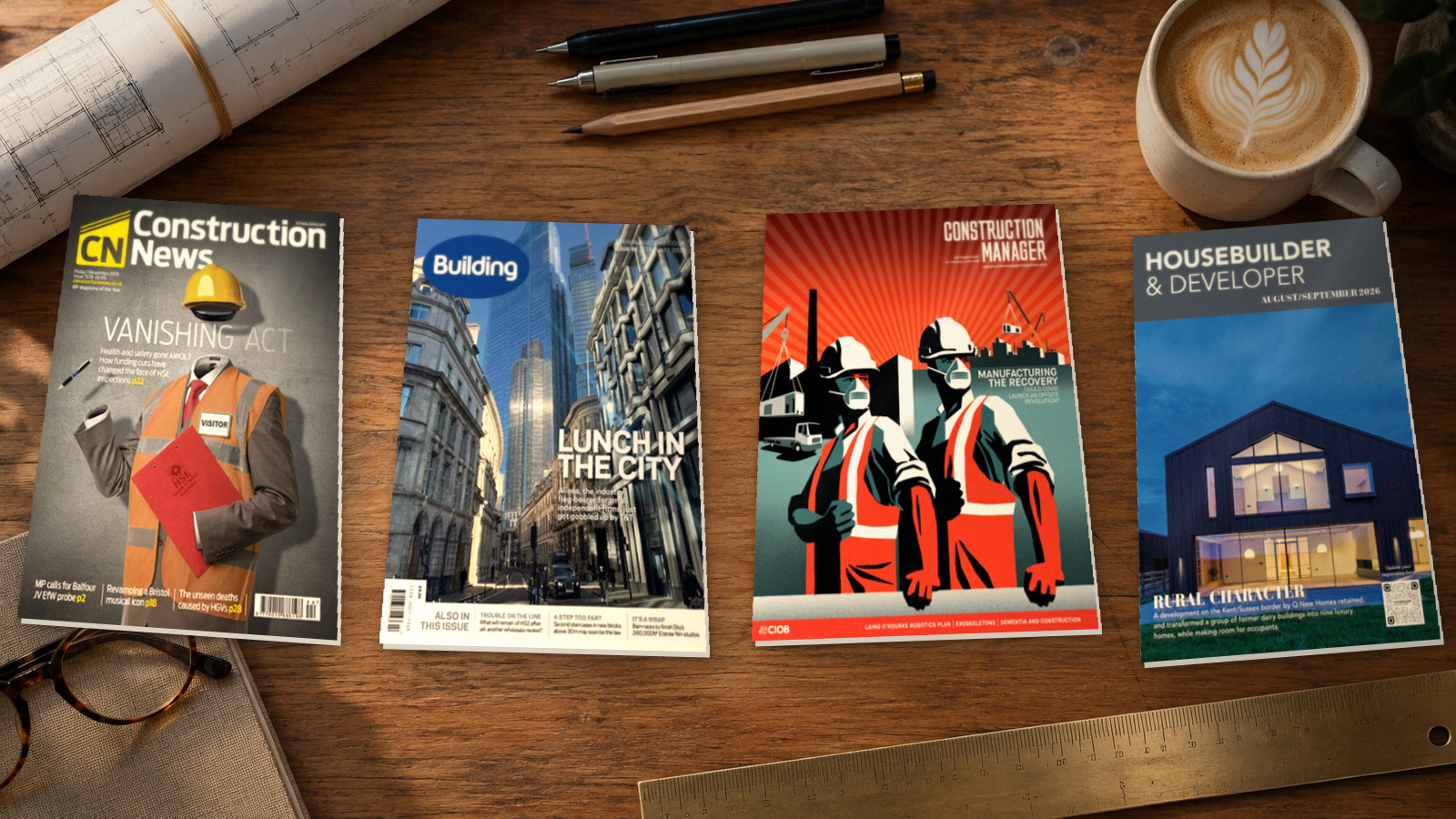
In an age where digital marketing dominates the conversation, it would be easy to assume that print media has had its day. Social media, websites, email marketing and online advertising all have an important role to play, but does that mean trade magazines and printed industry publications are no longer relevant?
As a construction marketing agency, I would argue quite the opposite. While the way people consume media has evolved, print continues to offer something that digital channels often struggle to replicate: credibility, authority and lasting engagement. So why are leading construction brands still investing in trade press coverage, and what value does it bring?
Trust matters more than ever
The construction industry remains relationship-driven. Whether you're targeting architects, specifiers, contractors, developers, housebuilders or merchants, purchasing decisions are often influenced by trust and expertise rather than impulse. This is where trade media excels. When a respected publication features your business, product or project, that coverage carries an endorsement by association. Readers aren't simply seeing a paid advertisement. They're engaging with editorial content that has been selected because it is considered relevant and valuable to the audience. For construction businesses looking to build their reputation, this matters.
Recent client examples include securing coverage for Kilnbridge in leading housebuilding publications, highlighting the company's fire protection expertise and project delivery capabilities. Similarly, Brett Landscaping and Building Products has featured in specification-focused publications, where its products and technical knowledge are reaching architects, landscape architects and specifiers at precisely the right time in the decision-making process.
I have also helped Capital Concrete secure significant editorial coverage in Concrete Magazine, one of the leading publications serving the UK concrete industry, enabling the company to showcase its expertise in developing and supplying lower-carbon concrete solutions.
Reaching the right audience is more important than chasing volume
One of the biggest misconceptions in PR is that success should be measured purely by the number of articles published or the total column inches achieved. I take a different view.
As a specialist construction marketing agency, I believe that quality almost always outweighs quantity. A half-page feature in a publication that is genuinely read and respected by your target audience is often worth significantly more than a double-page spread in a title that has little relevance to your sector.
Too often, PR agencies become focused on volume metrics. How many articles? How many pages? How many mentions? The real question should be: did the right people read it?
A concise article in a trusted industry publication can generate greater awareness, stronger engagement and more meaningful conversations than a lengthy feature appearing in a magazine that never reaches key decision-makers.
Good PR is not about creating the most coverage. It is about creating the right coverage.
Print creates a different type of engagement
Digital content is often consumed quickly. Articles are skimmed, links are clicked and attention moves elsewhere within seconds. Print works differently.
A physical magazine sits on desks, in meeting rooms and reception areas. It is passed between colleagues, revisited and referred to long after publication. Readers tend to spend more time engaging with editorial content and are often consuming it in an environment with fewer distractions.
There is also something tangible about seeing your company featured in print. Clients, employees, prospects and stakeholders frequently place greater value on a published article they can hold in their hands than a webpage they may have briefly viewed online. Print coverage feels established. It feels credible. And, importantly, it feels permanent.
Supporting broader marketing objectives
Perhaps the greatest strength of trade press coverage is that its value extends far beyond the publication itself.
A well-written feature can be repurposed across websites, social media channels, email newsletters and presentations. It can support SEO activity, create content for business development teams and provide third-party validation for prospective clients.
When developed strategically, editorial coverage helps businesses align themselves with key industry messages, demonstrate sector expertise and strengthen their position as thought leaders.
For construction businesses operating in competitive markets, that authority can be a significant differentiator.
The role of a construction marketing agency
Successful PR is not about sending press releases to every publication available and hoping for coverage. It starts with understanding the story. What is genuinely interesting? What challenges were overcome? What expertise can be shared? What lessons can the wider industry learn? The next step is translating that information into compelling editorial content and identifying the publications whose audiences will find it most valuable.
The best results come from matching the right story to the right publication at the right time. That is why I continue to secure coverage for clients across leading construction and building products titles. Whether the objective is raising brand awareness, supporting specification opportunities, promoting project success or positioning a business as an industry expert, trade press remains one of the most effective tools available.
David Ing is Founder of Ing Marketing, a specialist communications consultancy supporting organisations across construction, housing, manufacturing and the built environment. Explore his construction and built environment marketing services.